AR
Audit
Zendesk Architecture Review & support systems audit
Audit queues, forms, triggers, automations, permissions, integrations, knowledge gaps, reporting, and release risk before heavy implementation work.
See Architecture Review scope →CRM Scene helps support teams clean up, rebuild, connect, govern, and continuously improve Zendesk environments without adding more operational noise.
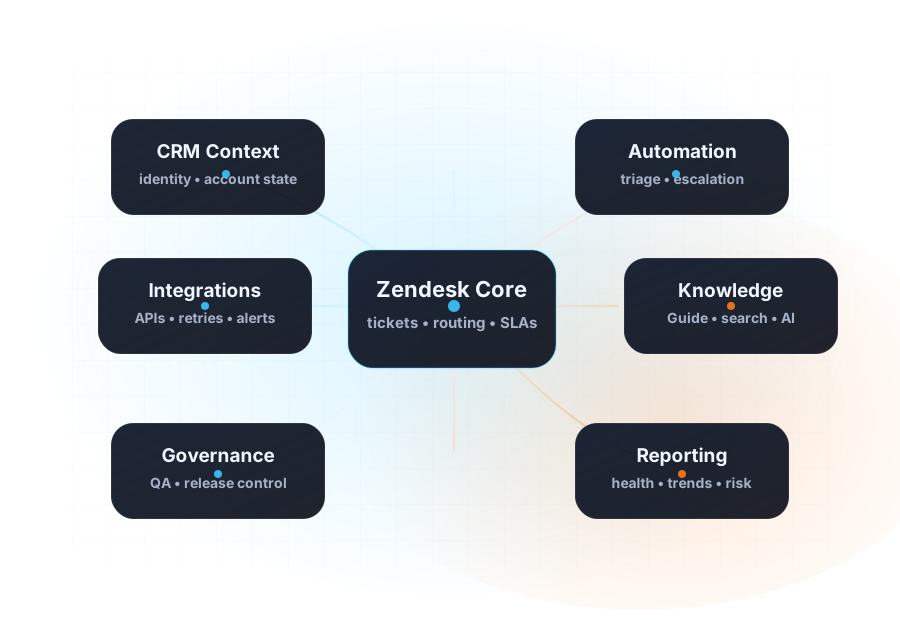
Choose the stream that matches the current pain: messy Zendesk setup, conflicting automations, unreliable integrations, weak knowledge governance, or a live system that needs steady optimization.
Audit queues, forms, triggers, automations, permissions, integrations, knowledge gaps, reporting, and release risk before heavy implementation work.
See Architecture Review scope →Plan, configure, migrate, integrate, test, and launch Zendesk with clear ownership, governed workflows, documentation, and post-launch support.
See Zendesk CRM implementation scope →Plan and run support-system migrations with source evidence, identity mapping, dry-run gates, cutover control, reconciliation, and stabilization.
See migration scope →Improve routing, escalation, notifications, macro logic, SLA behavior, and workflow quality with guardrails and monitoring.
See automation scope →Design API workflows, webhooks, retries, data contracts, observability, and support-safe incident handling across systems.
See integration scope →Reset taxonomy, templates, review cycles, multilingual help center structure, and AI/search readiness.
See knowledge ops scope →Install release gates, access controls, change management, quality review, and reporting discipline for safer production changes.
See governance scope →Use monthly backlog execution, analytics reviews, system tuning, documentation, and QA cadence to keep Zendesk healthy after launch.
See managed services scope →Use when the process, ownership, workflow, or tool decision is unclear and the team needs a cleaner operating model before build.
See systems design scope →Zendesk projects get expensive when teams quote before they understand the workflow debt, automation conflicts, integration dependencies, and governance gaps. The review turns ambiguity into a sequenced roadmap.
Capture the real workflow: queue rules, channels, integrations, article quality, permissions, reporting, and operational pain points.
Define the improved workflow, governance model, success measures, release plan, and what changes should happen first.
Implement the agreed scope with QA, launch criteria, monitoring, and documentation aligned to real operators.
Use reporting, ticket signals, and feedback loops to reduce drift, improve automation quality, and keep knowledge current.
See how CRM Scene scopes architecture reviews, implementation phases, optimization work, and custom Zendesk theme delivery.
Open pricing guide →Brand signals, partner status, and selected client categories that show where CRM Scene already operates.
Open proof page →Three public case examples that show how CRM Scene frames regulated ops, knowledge architecture, and integration design.
Open selected work →These pages cover gaps buyers often search for after reviewing implementation, automation, integrations, and knowledge operations.
CRM Scene improves Zendesk reporting, Explore dashboards, QA metrics, queue visibility, and executive support operations readouts.
Open scope ->CRM Scene trains Zendesk admins and operators with handoff docs, governance routines, release habits, and adoption support.
Open scope ->CRM Scene prepares Zendesk AI with knowledge quality, guardrails, escalation rules, QA loops, and measurable automation boundaries.
Open scope ->CRM Scene rebuilds Zendesk Guide with taxonomy, article templates, redirects, multilingual QA, theme readiness, and launch control.
Open scope ->CRM Scene designs Zendesk voice, SMS, callback, wrap-up, agent workspace, and contact center workflows with QA and reporting.
Open scope ->