
Pricing and scope bands

Pricing depends on risk, but the engagement paths are clear.

CRM Scene uses quote-based pricing because Zendesk cleanup, integrations, governance, and implementation risk vary by environment. The ranges below give budget orientation before a formal scope review.

Scope bands, not generic packagesArchitecture Review clarifies the quoteBudget shaped by systems, risk, and governance

Engagement modelsCommon commercial paths for Zendesk and support-system work.

Fixed-scope diagnostic

Architecture Review

A defined audit-and-roadmap engagement. Best when the current state is unclear and the buyer needs a prioritized plan before pricing build work.

Phase-based project

Implementation, rebuild, or integration phase

Scoped delivery for Zendesk setup, migration, cleanup, workflow build, API work, help center rollout, or a connected stream of changes.

Monthly cadence

Managed optimization retainer

Ongoing work for live environments that need backlog execution, QA, reporting reviews, workflow tuning, and controlled change management.

Scope bandsUse these bands to understand fit before a quote.

These are orientation bands, not fixed prices. Final pricing still depends on access, stakeholder speed, data quality, integrations, compliance needs, and whether CRM Scene is cleaning up legacy debt or building from a clean slate.

Diagnostic

Architecture Review

Best for messy or unclear current state. Produces a system map, risk register, quick wins, and sequenced roadmap.

Typical starting rangeUSD 3k–8kAudit, map, risk register, quick wins, roadmap.
Focused

Single-stream fix

Best for one contained lane: automation audit, routing cleanup, help center reset, dashboard improvement, or targeted admin cleanup.

Typical project rangeUSD 5k–20kContained automation, routing, reporting, or knowledge cleanup.
Build

Implementation or rebuild

Best for new Zendesk launch, migration, multi-channel setup, integration work, or broader operating-model redesign.

Typical project rangeUSD 18k–75k+Implementation, migration, multi-channel rebuild, or integration stream.
Retained

Managed optimization

Best for live systems that need recurring improvements, governance, QA, reporting, backlog execution, and release discipline.

Typical monthly rangeUSD 4k–15k/moRecurring backlog execution, QA, reporting, and optimization cadence.
Zendesk theme budget anchor: simple branded theme work usually starts lower than a full support-system rebuild, while multi-brand, multi-locale, governed theme programs can move into the same budget class as implementation work. Use the Architecture Review when theme UX, routing, knowledge governance, and integrations are connected.

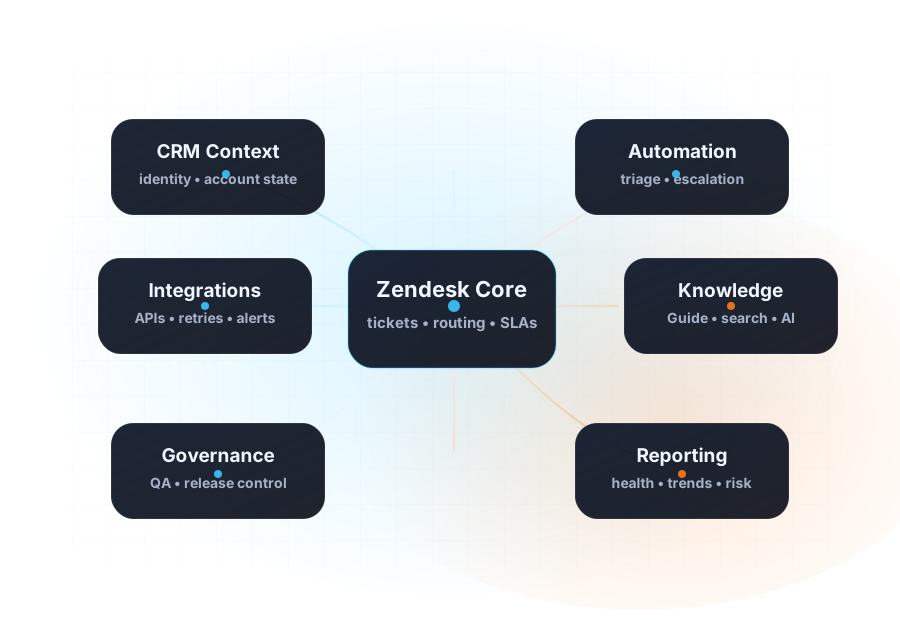
What changes the quoteThe variables that make the same “Zendesk project” simple or complex.

Zendesk structure

  • Number of brands, channels, forms, groups, views, SLAs, and queues
  • Greenfield setup versus legacy cleanup, migration, or rebuild
  • Depth of Guide/help center structure, localization, and admin ownership

Integration surface

  • How many external systems affect support decisions
  • Whether API contracts, retries, alerts, and observability need redesign
  • How quickly engineering, data, finance, or CRM owners can support the work

Governance and delivery risk

  • Compliance, approval, role, audit, or release-control requirements
  • How much documentation, QA, change communication, and training are needed
  • Whether the client has internal ownership or needs CRM Scene to provide more stewardship
The same request can be a quick cleanup, a controlled rebuild, or a complex cross-system project. Scope bands help identify the right starting point before a formal quote.

Typical first conversationsHow teams usually narrow scope before a quote.

Audit-first

“We need to understand what is broken first.”

Start with Architecture Review when the current state is messy, undocumented, or politically unclear.

Build-first

“We know what we need to launch.”

Move directly into scoped implementation or theme work when the problem is already clearly framed and dependencies are manageable.

Operate-first

“The system is live but quality keeps slipping.”

Use managed optimization when the main need is backlog execution, workflow tuning, knowledge maintenance, or governance after launch.

FAQCommon pricing questions.

The pricing guide explains the model, but final pricing is quote-based because workflow risk and system complexity vary across clients.
Start with a clear brief or an Architecture Review. Cleaner scope almost always produces a better quote and a faster delivery path.
Yes. CRM Scene can quote a focused automation audit, implementation phase, integration stream, help center improvement project, or retained optimization lane.
Yes. Good scoping includes tradeoffs: what can ship first, what can wait, and what should not be attempted until the operating model is clearer.
No. They are planning anchors, not quotes. A final proposal still depends on system access, stakeholder speed, legacy debt, integrations, compliance requirements, and how much delivery ownership CRM Scene carries.

Related pagesPages that help teams translate price into scope.

Services

Service pages

See what each service covers and which team situation it is designed for.

Open services →
Planning help

FAQ

Read answers on timelines, scope, Zendesk focus, and how CRM Scene works with client teams.

Open FAQ →
Contact

Contact CRM Scene

Share your platform mix, objective, constraints, and timeline to begin a scoping conversation.

Open contact page →