Frequently asked questions

Questions about CRM Scene, Zendesk services, and engagement fit.

Answers in plain language on implementation, automation, integrations, knowledge ops, governance, pricing shape, timelines, and how CRM Scene works with client teams.

Planning questions answered directlyBuilt around real scoping conversationsUseful before the first call

GeneralWhat CRM Scene does and where it fits best.

CRM Scene designs and improves support systems: Zendesk implementation, automation, integrations, knowledge operations, governance, themes, and ongoing optimization.
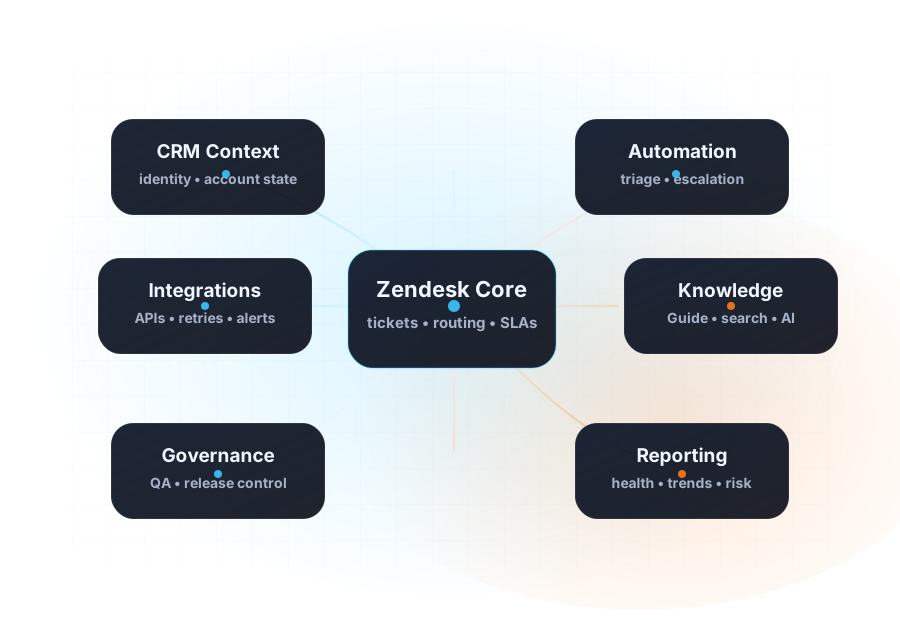
Zendesk is a deep specialty and a major proof surface, but the work often spans CRM, finance systems, identity, analytics, internal tools, and knowledge operations around the support experience.
CRM Scene is strongest with growing or complex support teams that need a cleaner operating model, better governance, or more reliable system behavior—not just more tickets closed faster.
Yes. The delivery model is built to handle auditability, access control, release discipline, documented escalation, and safer workflow design for high-stakes support operations.

Services and scopeHow engagements usually start and what they cover.

Architecture Review is usually the best entry point when the current state is messy or when leadership wants a clearer roadmap before implementation work begins.
Yes. Many clients begin with a routing audit, automation cleanup, integration review, knowledge governance reset, or help center refinement before wider implementation work starts.
Implementation can include channel setup, forms, fields, groups, business rules, permissions, help center structure, QA, rollout planning, and post-launch stabilization.
Yes. Managed optimization is for backlog execution, reporting reviews, workflow tuning, knowledge iteration, governance, and post-launch improvements that need regular attention.

Pricing and timelineCommercial questions to answer before scope is finalized.

The pricing guide explains the engagement model, but final pricing is quote-based because scope depends on brands, channels, integrations, knowledge depth, governance needs, and timeline pressure.
Typical drivers are legacy cleanup, number of systems, multilingual complexity, support-team structure, compliance requirements, and how much documentation or change management the client needs.
Architecture Reviews are usually the fastest starting point. Implementation, integrations, knowledge resets, and retained optimization vary based on scope, dependencies, and how much of the current system must be cleaned first.
Yes. CRM Scene often works with internal owners, operations leads, and engineering partners so the resulting system is clear, maintainable, and well owned after delivery.

Related pagesPages that answer the next layer of planning questions.

Commercial

Pricing guide

Review CRM Scene’s engagement model and what most strongly shapes scope and timing.

Open pricing guide →
Services

Service pages

See who each service is for, what it delivers, and what a strong first phase looks like.

Open services →
Proof

Selected work

Use public case studies to connect the FAQ to real support-system delivery examples.

Open selected work →