
What work enters the system?
Customer requests, internal tasks, approvals, partner issues, onboarding steps, billing questions, risk signals, or operational exceptions.
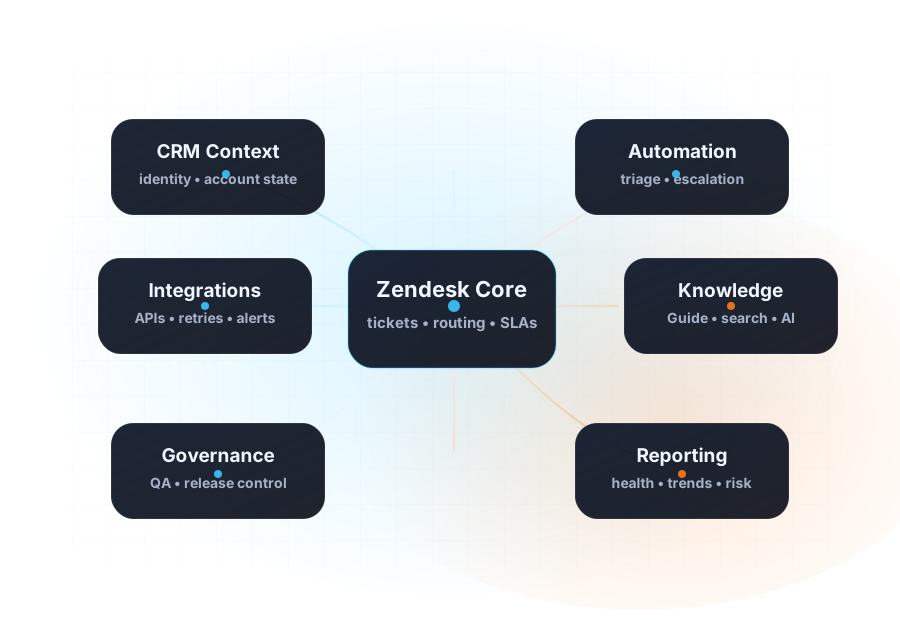
CRM Scene works at architecture level. Zendesk may be the service layer, but the full system also includes intake, CRM context, approvals, finance and risk data, knowledge, analytics, AI, and operational governance.
Tickets, forms, routing, channels, SLAs, ownership, and customer-visible support journeys. Zendesk often sits here.
Identity, lifecycle state, account context, segmentation, and relationship history routed into operational workflows.
Back-office tasks, handoffs, approvals, exception paths, and operational rules that determine what happens next.
Critical state changes and controlled data exposure for support, success, operations, and regulated workflows.
Governed articles, internal playbooks, retrieval readiness, agent assist, and review loops for safe automation.
Operational reporting, queue health, QA trends, backlog movement, root causes, and management dashboards.
The goal is not to install another tool. The goal is to make work traceable, owned, measurable, and easier for teams to execute without hiding risk inside automation.
Customer requests, internal tasks, approvals, partner issues, onboarding steps, billing questions, risk signals, or operational exceptions.
Queues, teams, roles, escalations, SLA rules, approvals, and exception paths need explicit ownership before automation scales.
Dashboards should reflect operating health: backlog, throughput, failure points, QA, first-contact quality, and root causes.
What exists today, where work happens, and who owns each system, queue, workflow, data dependency, and integration.
A practical plan for build order, tools, stakeholders, implementation phases, governance gates, and launch readiness.
Dependencies, data contracts, failure modes, manual fallback routes, monitoring, and support-safe incident handling.
Metrics that connect system changes to queue health, speed, quality, workload, deflection, cost, and customer outcomes.