
Service page

Support governance, QA, and release control for teams that need cleaner production discipline.

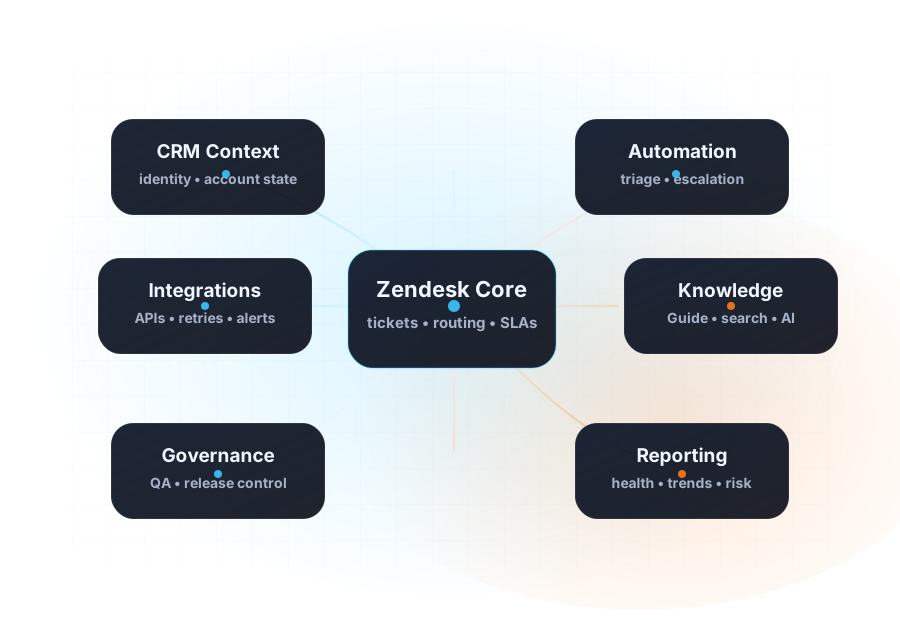
CRM Scene helps support teams reduce drift by clarifying approvals, QA expectations, rollout logic, permissions, and the operating rules that keep production changes safe.

Release disciplineQA workflowsAudit-friendly operating controls

What this engagement deliversSupport governance, QA, and release control

Control output

Release gates and approval logic

The service defines what needs review before production changes ship, who signs off, and how rollback or incident paths are handled.

Security output

Access and ownership clarity

Governance work reduces admin ambiguity by tightening permissions, owner roles, and escalation responsibilities.

Ops output

QA and operating routines

Teams get repeatable checks for workflow changes, automation edits, content updates, and support-facing incidents.

Who it is forWhen this service is the right next move.

Best fit for teams where changes keep causing regressions

  • Production updates are frequent but poorly controlled
  • Multiple admins or contributors touch the system with inconsistent review
  • Leadership wants stronger auditability or compliance evidence around support operations

What governance should cover

  • Workflow changes, rule updates, permissions, knowledge publishing, and integration releases
  • QA routines, sign-off requirements, and exception paths
  • Incident communication and rollback logic
  • Ownership boundaries for operations, admins, and engineering partners

What better governance changes

  • Fewer accidental regressions and surprises after release
  • Clearer handoffs and decision rights
  • Stronger auditability for regulated teams
  • A support stack that stays cleaner over time instead of drifting back into chaos
Sensitive client details stay private, but the scope, delivery logic, and operating model are described here as clearly as possible.

Engagement flowHow the work usually progresses.

01

Review the current release behavior

Identify where risky changes happen today, who approves them, and what evidence exists when something goes wrong.

02

Define the governance model

Set release gates, QA rules, access boundaries, documentation expectations, and owner responsibilities.

03

Apply the model to real workflows

Use current automation, integration, or knowledge changes as the proving ground for the new process.

04

Build the operating rhythm

Move governance from a one-time document into repeatable monthly or sprint-based practice.

Related pagesRelated pages to review next.

Related scope

Automation services

Add governance around automation changes so routing and escalations improve without creating new operational risk.

Open automation page →
Related scope

Managed optimization

Governance is what keeps ongoing optimization useful after the first round of major fixes.

Open managed services page →
Resource

Automation release-gates playbook

Use a practical model for approving, testing, and rolling back support-system changes.

Open playbook →

FAQQuestions we usually answer before kickoff.

No. Regulated environments benefit the most, but almost every growing support team needs cleaner change control once multiple admins or workstreams are involved.
Yes. Good governance should match the risk of the workflow. CRM Scene avoids heavy process where a lighter review model is enough.
QA is part of governance, not separate from it. Release confidence depends on clear checks, expected outcomes, and a habit of testing before shipping changes.
Automation, integrations, managed optimization, and Architecture Review often lead directly into governance work.