MAP
Architecture
Integration map with explicit ownership
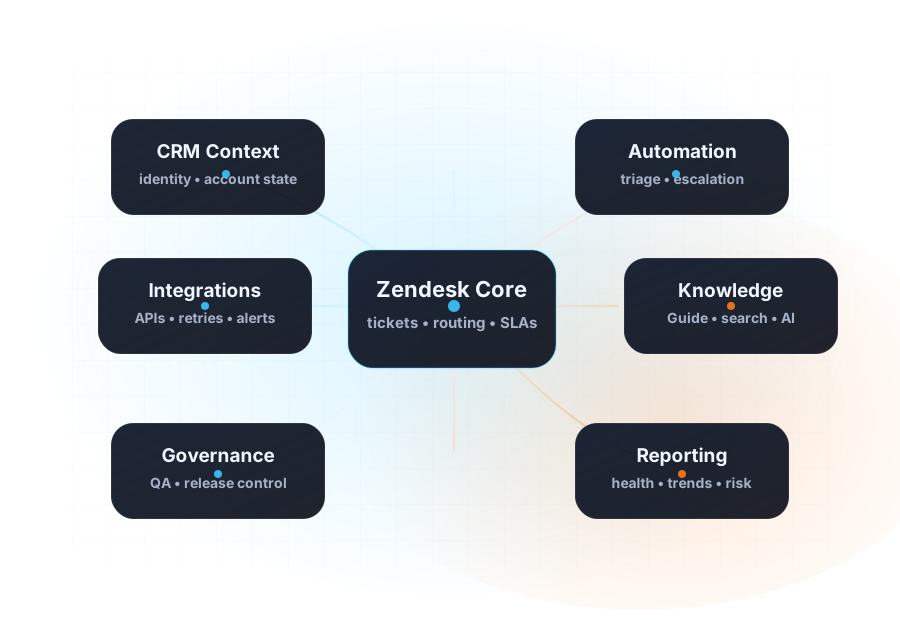
The work clarified which systems owned data, which events mattered, and where support depended on each handoff.
A sanitized case study focused on event-driven sync, retry behavior, clearer ownership, and support-safe runbooks for a multi-system environment.
Support teams depended on data moving across multiple systems, but ownership boundaries were unclear and failures were difficult to interpret operationally. Technical retries existed in places, but the support workflow around missing or stale data was not mature enough.
The project focused on system behavior, accountability, and operator clarity—not just transport-level integration. The point was to make the handoffs more reliable and easier for the team to understand.
The work clarified which systems owned data, which events mattered, and where support depended on each handoff.
Integration behavior was paired with clearer expectations for retries, degraded states, and what teams should do when sync failed.
The result was not only technical observability but also clearer operational language for support and operations teams.
A stronger integration layer meant fewer support blind spots, better automation behavior, and more confidence in how customer context arrived inside the workflow.
The points below describe measures to track or verify. They are not published before-and-after findings for this engagement.
Count systems, data contracts, webhook/API paths, retries, alerts, owners, and support-visible failure states.
Track silent failures converted into alerts, runbooks, fallback states, or named engineering/support escalation paths.
Measure how many integration incidents have clear owner, customer impact, resolution notes, and next-action guidance.
Identify what support needs from connected systems and what breaks when those handoffs are unreliable.
Define ownership, sync behavior, retries, monitoring, and degraded-state handling before heavy build work continues.
Stage the integration changes, test operational edge cases, and confirm the team understands the new behavior.
Turn the new design into clear runbooks, escalation language, and a stronger reporting model for ongoing ownership.
See how CRM Scene approaches API workflows, event-driven sync, and support-safe runbooks.
Open integration services →Automation quality depends on reliable data contracts and cleaner event flows.
Open automation page →Use a structured checklist to find fragile handoffs, ownership gaps, and hidden risk before deeper integration work starts.
Open playbook →