Q
Queues
Queue and routing redesign
Routing rules were tied more explicitly to ownership, issue type, and escalation expectations so work landed in the right place earlier.
A sanitized case study for regulated support operations: queue ownership, controlled automations, documented escalation paths, and leadership-ready reporting discipline.
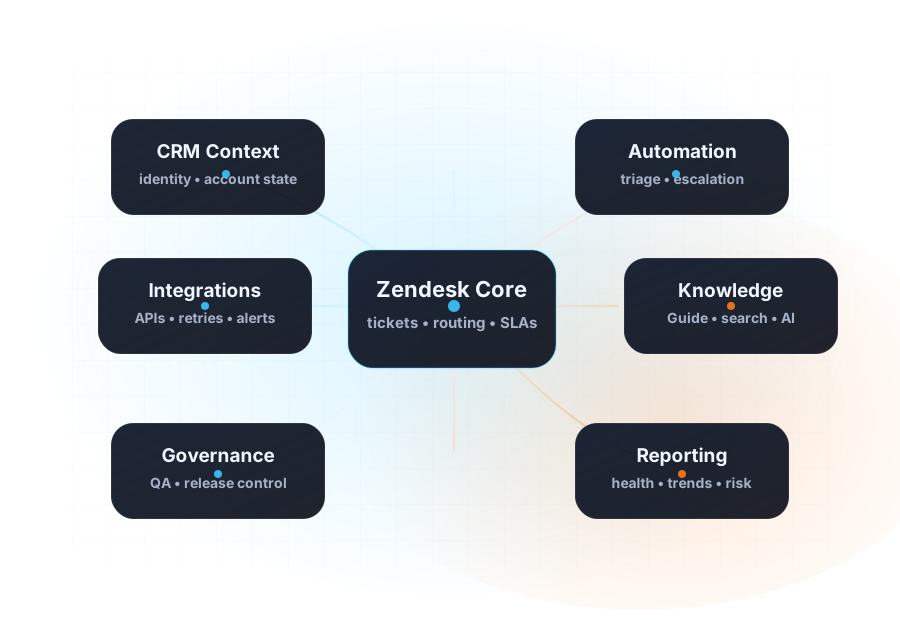
The support operation had to move faster without sacrificing auditability. Routing logic had become hard to trust, escalation handling was inconsistent, and production changes carried more risk than the team wanted.
The project was treated as an operating-model problem, not just a rule-writing task. Queue ownership, workflow boundaries, QA expectations, and reporting all had to improve together.
Routing rules were tied more explicitly to ownership, issue type, and escalation expectations so work landed in the right place earlier.
Automations were designed with clearer exception handling and less hidden dependency on admin memory or manual cleanup.
The project clarified what leadership needed to see regularly to understand queue health, workflow stability, and release risk.
The team could move faster with less operational anxiety because the system logic, review process, and reporting signals were easier to understand and defend.
The points below describe measures to track or verify. They are not published before-and-after findings for this engagement.
Count groups, forms, views, SLAs, triggers, escalation owners, and exception paths before changing production.
Track which workflow changes pass QA, approval, rollback notes, and stakeholder communication before launch.
Document who owns regulated case types, when escalation is required, and which reporting view proves the path.
Review queues, rules, handoffs, approvals, and where support can accidentally create compliance or service risk.
Clarify owner paths, automation boundaries, and the conditions that trigger deeper review.
Validate the new behavior, document exceptions, and stage production changes carefully.
Use reporting and QA to keep the model stable after launch instead of letting the same drift return.
See how CRM Scene improves routing quality and escalation behavior without adding hidden risk.
Open automation services →Review the release-control and approval model behind safer production changes.
Open governance page →Use a practical framework for approvals, QA, and rollback-aware workflow changes.
Open playbook →