SV
Service
Zendesk implementation services
See how CRM Scene turns checklist thinking into structured implementation and rebuild work.
Open implementation services →Before forms, fields, triggers, and help center pages get built, the team needs a stronger answer to a more important question: how should support operate once the system goes live?
Published for support leaders, operators, and admins evaluating support-system upgrades.
Reviewed for delivery realism, operational risk, and search-language clarity before publication.
Use this guide to clarify scope, identify hidden risk, and plan a cleaner next step before implementation.
A lot of Zendesk implementation work goes wrong because teams start with screens and settings instead of the operating model. They decide on fields before they agree on queue ownership. They configure automations before they define escalation logic. They design a help center before they know who will keep knowledge current.
A useful implementation rule: start with clarity about how work should move, who owns each step, what must be observable, and which mistakes are unacceptable in production.
Start with the support operating model. What work comes in, how is it categorized, where should it land, and what is the expected decision path from intake to resolution? If the team cannot describe that clearly, the system will absorb the confusion instead of fixing it.
Then define ownership. A good implementation makes it obvious which team owns queue logic, which team reviews knowledge, who approves production changes, and who is responsible when integrations fail or data is stale.
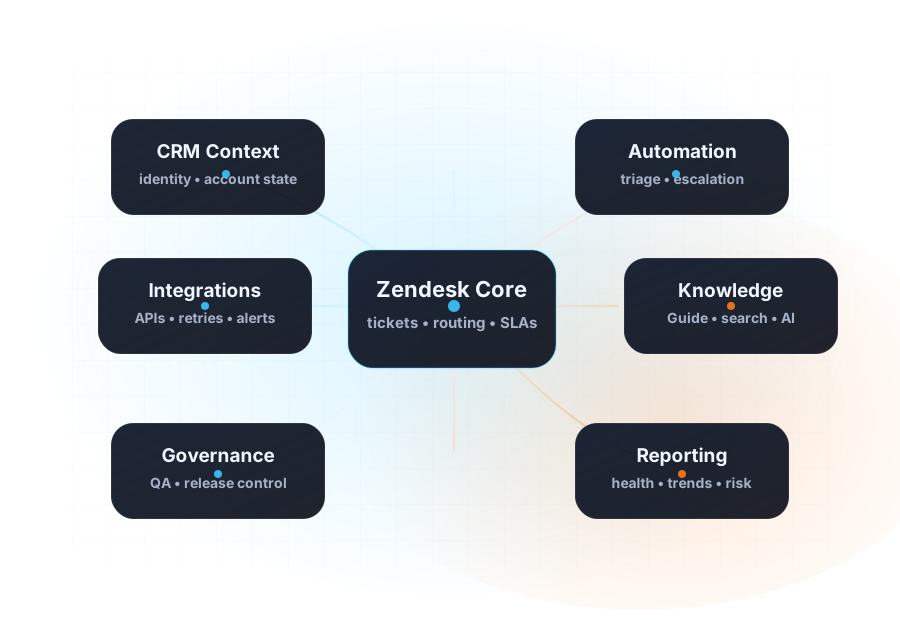
Only after that should the team move into forms, fields, groups, business rules, macros, SLAs, help center structure, and reporting expectations.
Strong teams accept that implementation is partly technical and partly operational. They do not outsource judgment about ownership, risk, or what “good” should look like after go-live.
They also invest in clearer launch criteria. That means testing not only the happy path, but also edge cases: wrong form selections, missing context, queue overflow, stale knowledge, and approvals that do not happen on time.
That discipline usually makes later automation, reporting, and optimization work much easier because the first layer of structure is cleaner.
See how CRM Scene turns checklist thinking into structured implementation and rebuild work.
Open implementation services →Use a shorter operational framework when you need to audit the current state before a rebuild.
Open playbook →See how CRM Scene scopes review work, implementation phases, and ongoing optimization.
Open pricing guide →